How Phone Habits Affect Posture and Health
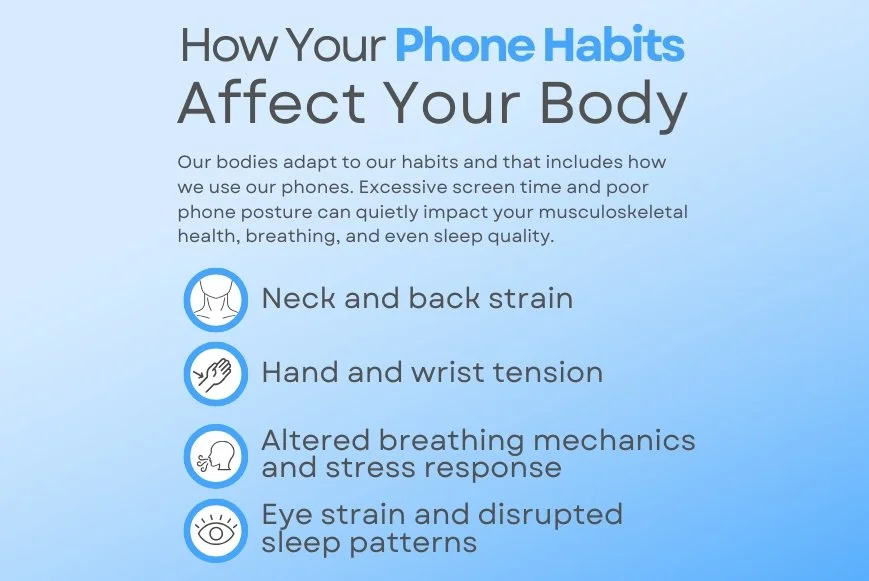
Smartphones are woven into daily life. From answering emails to scrolling social media before bed, most adults spend hours each day looking down at a screen. What often goes unnoticed is how those small, repeated habits influence the body over time.
At DexaFit West Houston in Houston, Texas, we regularly see how lifestyle patterns show up in posture, breathing mechanics, recovery metrics, and body composition trends. Your phone is not the enemy. However, the way you use it can quietly shape how your body feels and functions.
Understanding these patterns is the first step toward protecting long-term musculoskeletal health and optimizing performance and recovery.
Dr. Gregory Burzynski often reminds patients: “The body adapts to what you do most. If you’re constantly looking down at a screen, your posture and breathing will reflect it. Once we measure it, we can adjust it.”
What Happens to Your Body When You’re on Your Phone All Day?
The answer is subtle but significant. The effects are rarely caused by one long session. Instead, they accumulate through daily repetition.
Many adults develop forward head posture from looking down at a screen. Even a small tilt of the head increases strain on the cervical spine. Over time, this can contribute to chronic neck tension, shoulder tightness, and upper back discomfort often referred to as “tech neck.”
Common physical effects of frequent phone use include:
• Neck and upper back strain
• Rounded shoulders and poor posture alignment
• Hand and wrist tension sometimes called “text claw”
• Jaw tension linked to screen-related stress
When posture shifts forward, breathing patterns can change as well. The diaphragm may not move as efficiently, leading to shallow chest breathing. This altered breathing pattern can influence the body’s stress response and reduce recovery efficiency after workouts or long workdays.
At DexaFit West Houston, advanced testing such as DexaFit Body Scans, Resting Metabolic Rate testing, and VO₂ max assessments help adults see how daily stressors, including posture habits, may influence muscle balance, recovery patterns, and metabolic trends over time. Under the clinical oversight of Dr. Gregory Burzynski, these data-driven insights support sustainable improvements in movement, recovery, and long-term longevity.
Can Phone Use Affect Breathing and Sleep?
Yes, and often in ways that are not immediately obvious.
Late-night screen exposure can interfere with natural sleep cycles. Blue light exposure may disrupt melatonin production, making it harder to fall asleep and stay asleep. Poor sleep quality affects recovery, hormone balance, appetite regulation, and overall metabolic health.
In addition to sleep disruption, prolonged screen time can impact breathing mechanics. When the shoulders round forward and the chest collapses slightly, lung expansion may be limited. Shallow breathing patterns can increase perceived stress and reduce oxygen efficiency during exercise.
Adults who notice frequent fatigue, tension headaches, or slower recovery may benefit from examining not only their workouts and nutrition but also their daily digital habits.
At DexaFit West Houston, several services provide objective data to track how the body responds to stress and recovery patterns:
• DEXA scans to assess body composition and muscle balance
• Resting Metabolic Rate testing to understand energy needs
• VO₂ max testing to evaluate cardiovascular efficiency
• Recovery tracking to monitor trends over time
When technology habits are paired with measurable data, adults gain clarity on how small lifestyle adjustments influence long-term healthspan.
Building Smarter Digital Habits for Longevity
Technology is part of modern life, and avoiding it completely is unrealistic. The goal is awareness, not elimination.
Small changes can help support posture, breathing, and recovery:
• Raise your phone to eye level instead of looking down
• Take posture breaks every 20 to 30 minutes
• Perform gentle neck and shoulder mobility exercises daily
• Limit screen exposure at least 60 minutes before bedtime
• Practice slow, diaphragmatic breathing during breaks
These adjustments may seem minor, but consistency is what creates change. The body adapts to repeated patterns, whether those patterns support strength and alignment or strain and imbalance.
Measuring How Daily Habits Impact Your Body
DexaFit West Houston approaches digital wellness and posture health through measurement and education. Instead of guessing, adults can evaluate how daily stressors affect body composition, metabolism, and recovery using advanced, noninvasive testing.
Services such as DEXA scans, Resting Metabolic Rate testing, and VO₂ max assessments provide objective data about muscle balance, metabolic efficiency, and cardiovascular performance. Tracking these metrics over time allows for practical, data-driven adjustments that fit real life.
Optimizing health is not only about intense workouts or restrictive diets. It is about understanding how everyday behaviors including phone posture and screen time influence long-term performance, comfort, and resilience.
If you are curious how your daily habits are affecting your body composition, metabolism, and recovery trends, schedule an assessment at DexaFit West Houston in Houston, Texas. Objective data provides clarity and supports smarter decisions for longevity and performance.