Zone 2 Heart Rate: Why Your Watch Zone May Not Be Your Personal Zone
Zone 2 training is useful because it gives people a framework for lower-intensity aerobic work. The problem is that many “personal” zones begin with a generic formula. If the input is an estimate, the zone is still an estimate.
Why generic heart-rate zones are convenient
Age-based formulas make training easy to organize. They can provide a practical starting point without specialized equipment.
But people of the same age can have different maximum heart rates, fitness levels, training histories, and exercise responses. That means a formula should be treated as a framework rather than a perfect physiological boundary.
VO2 testing measures what happens as intensity rises
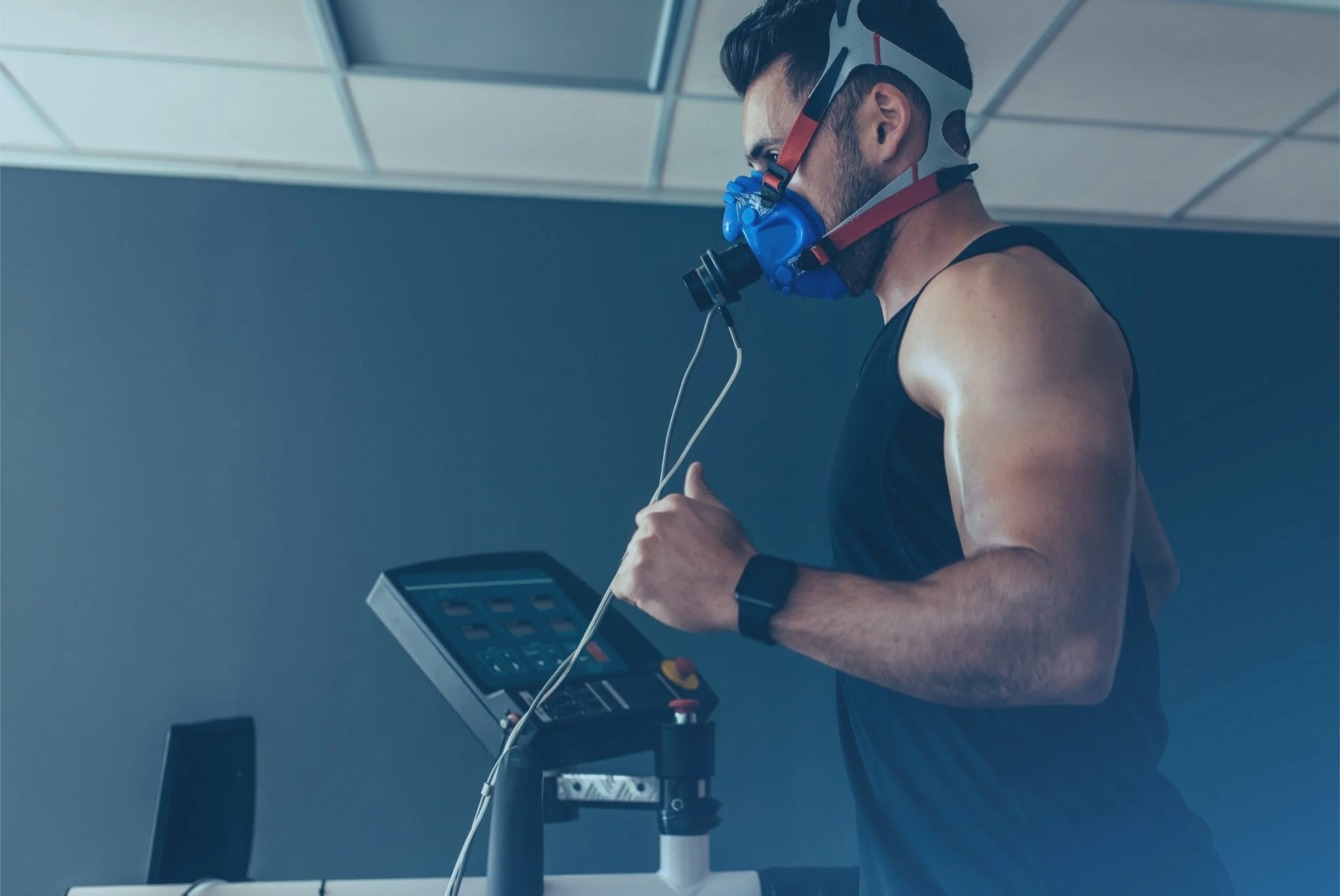
During VO2 Max testing at DexaFit West Houston, exercise intensity increases while oxygen use and carbon-dioxide output are tracked. The resulting data can help characterize aerobic capacity and training intensity.
This gives a person more individualized information than a zone created only from age or a generic percentage.
Your watch is still useful
A laboratory-style test does not make a wearable obsolete. Watches are valuable because they collect data during real workouts, over long periods, in normal environments.
The smarter approach is to understand the role of each tool. Testing can establish a controlled physiological baseline. A wearable can help apply and monitor training outside the testing environment.
Zone 2 is not a magic number
Heart rate changes with heat, hydration, sleep, stress, caffeine, illness, and accumulated fatigue. A few beats above or below a zone boundary do not automatically turn a workout into a failure.
Training zones should make exercise more intentional, not more anxious.
Start with the purpose of the workout
Before chasing a zone, define the goal. Is the session supposed to be easy aerobic work? Is the person preparing for a race? Is the goal general cardiovascular fitness? The purpose determines how much precision is useful.
Heart rate is useful, but context changes it
Heart rate is influenced by more than exercise intensity. Heat, hydration, sleep, stress, caffeine, illness, and accumulated fatigue can all change the number seen during a workout. That is one reason a zone boundary should not be treated as a biological cliff.
Training should remain responsive to the person. Testing can add precision, but perceived effort, performance, recovery, and the purpose of the session still matter.
How to use a VO2 baseline over time
A baseline becomes more valuable when there is a reason to compare it later. An endurance athlete may retest after a structured training block. A recreational exerciser may want to know whether aerobic capacity has improved after becoming more consistent.
The goal is not frequent testing for its own sake. Retest when the result can help evaluate the program or guide the next phase.
Frequently asked questions
Is Zone 2 the same heart rate for everyone?
No. Generic formulas provide estimates, and individual physiological responses vary.
Does a VO2 test give me permanent zones?
No. Fitness can change, and heart-rate response also varies with conditions. Test results are a snapshot that can inform training.
Do I need a VO2 test to exercise effectively?
No. Many people train successfully without laboratory-style testing. Testing is most useful when additional precision will change a decision.
Do not confuse precision with perfection
Even individualized testing does not create a permanent, perfectly fixed training zone. Physiology changes with fitness and circumstances, and heart rate during a real workout responds to more than intensity alone.
The advantage of testing is better context. It can help replace a generic starting point with measured information and make training conversations more specific. The athlete or exerciser still needs to combine that information with recovery, perceived effort, performance, and the purpose of each session.
Want to understand the physiology behind your training zones? Schedule a VO2 Max test at DexaFit West Houston.
Published by DexaFit West Houston | Dr. Gregory Burzynski | Serving West Houston & Harris County, TX | (713)834-4353
Educational purposes only. Not medical advice.