What Does NAD+ Do for Energy and Aging? | Houston TX
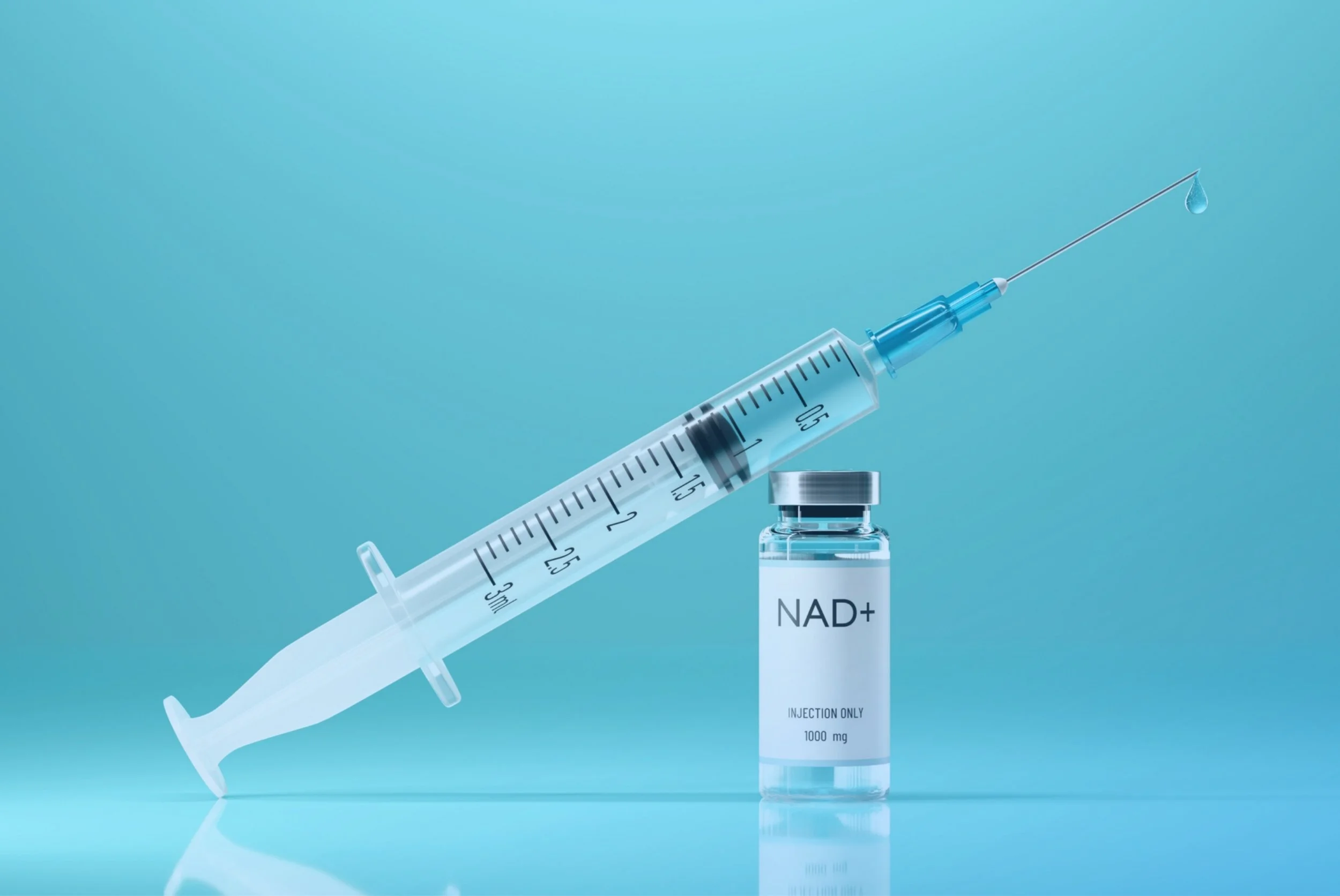
What Does NAD+ Actually Do, and Why Does It Decline With Age?
NAD+ is a coenzyme present in every cell that plays a central role in converting food into usable cellular energy and in carrying out cellular repair. Levels decline with age, and that decline is why NAD+ became a focus of longevity research.
September is Healthy Aging Month, and NAD+ therapy is one of the options available at DexaFit West Houston.
The Role It Plays Inside the Cell
NAD+ participates in the reactions that turn nutrients into ATP, the energy currency cells actually spend. Without adequate NAD+, that process becomes less efficient.
It also supports enzymes involved in DNA repair and in regulating cellular maintenance processes.
Because it is involved in energy production and repair simultaneously, a decline affects two things people care about at once: how they feel day to day, and how well cells maintain themselves over years.
Why Levels Fall Over Time
The decline appears to result from both reduced production and increased consumption as we age.
Cellular stress, inflammation, and accumulated DNA damage all increase demand on NAD+ dependent repair processes, while the body's capacity to regenerate it becomes less efficient.
The net effect is less available NAD+ at exactly the point in life when repair demand is rising, which is the core of why researchers find it interesting.
What People Are Hoping to Support
Expectations in this category run high, and grounding them helps.
- Cellular energy production and general daily energy
- Repair processes that slow with age
- Recovery from training or periods of high demand
- Metabolic function more broadly
Research is ongoing, results vary between individuals, and no therapy reverses aging. Any claim otherwise should be treated skeptically regardless of who is making it.
Why a Baseline Should Come First
Starting a therapy without knowing where you began makes it impossible to tell whether anything changed.
If low energy is the reason you are considering NAD+, several other explanations deserve ruling out first. Thyroid function, iron and B12 status, sleep quality, and chronic under eating all produce similar symptoms and are more directly addressable.
A comprehensive lab panel covers most of those. An RMR test addresses whether you are simply eating too little for your actual needs.
Sometimes the honest answer is that a therapy is not the missing piece, and that is a genuinely useful finding.
Healthy Aging Is Mostly Unglamorous
Healthy Aging Month is a reasonable moment to say the obvious part out loud.
Maintaining muscle mass, staying aerobically fit, sleeping properly, and eating enough protein account for far more of how aging goes than any single intervention does.
A DEXA scan tracks lean mass and bone density over time, which are two of the most meaningful markers in that picture. Therapies sit on top of those fundamentals, never instead of them.
Frequently Asked Questions
Is NAD+ therapy the same as taking an NMN or NR supplement?
No. NMN and NR are oral precursors the body converts toward NAD+. NAD+ therapy delivers it through a different route. The approaches differ in delivery and are worth discussing based on your situation.
How would I know if it is working?
Any assessment depends on having a baseline first. Tracking energy, training performance, sleep, and relevant lab markers before and after gives you something more reliable than impression alone.
Is NAD+ therapy right for everyone?
No. Suitability depends on your health history and current medications, and it is worth discussing with your physician. Our team will review your situation before proceeding.
Start With Data, Then Decide
If energy is the thing you want to change, measuring first tends to produce better decisions than starting first. Book your appointment at DexaFit West Houston, 9432 Katy Fwy #400, Houston, Texas 77055, or call (713) 834-4353.
Published by DexaFit West Houston | Dr. Gregory Burzynski | Serving West Houston & Harris County, TX | (713)834-4353
Educational purposes only. Not medical advice.